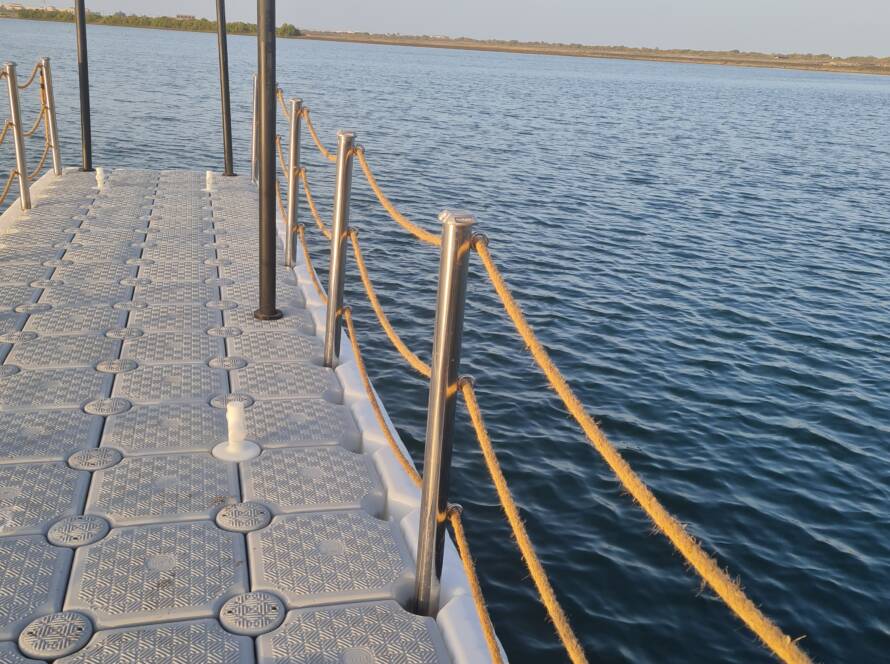
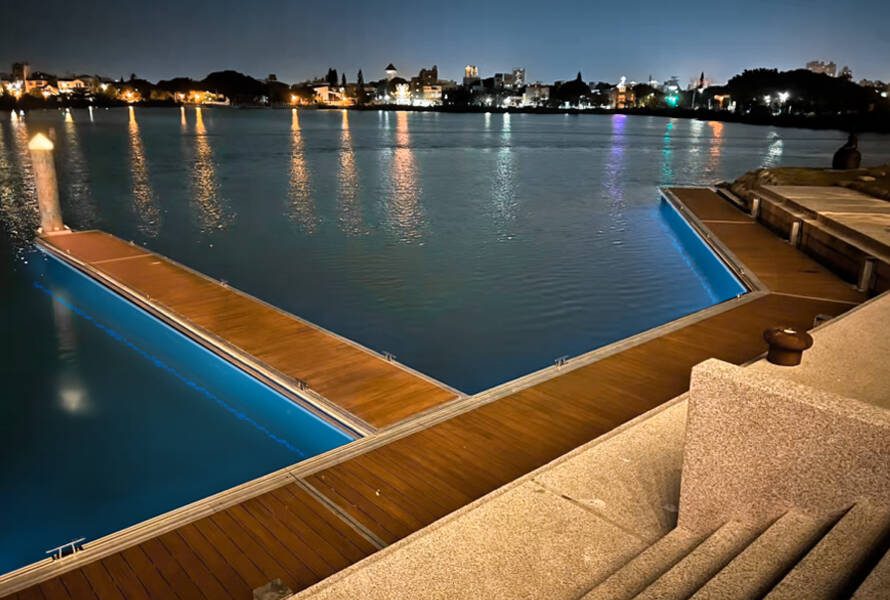
Build Safer Access to Your Floating Dock Year-Round
Safe dock access starts with a safe gangway. As spring boating picks up across the UAE, more families, guests, and staff walk that same narrow path from solid ground to a moving floating dock every single day. If that path is steep, slippery, or poorly built, small problems can turn into real accidents.
The gangway is the part people often ignore while they focus on boats, berths, and platforms. But it is the first and last thing everyone uses. When it is well designed, the whole waterfront feels calm, clear, and secure, even with changing water levels and busy marine traffic.
At Wavetech Marine Docks, we design and build custom gangways that work with local UAE conditions, from private villas to marinas and heavy industrial sites. Here we will walk through key safety principles, smart material choices, design ideas for real UAE use cases, and simple checks you can use on your own waterfront.
Why Gangway Safety Matters on UAE Waterfronts
The gangway is the main bridge between land and a floating dock. One side is fixed, the other is moving with the water, so it is where most slips, trips, and awkward steps tend to happen if the design is not planned carefully.
On UAE waterfronts, the risks are shaped by local conditions, such as:
- Strong sun that heats surfaces and makes people tired and distracted
- Glare on wet decks that makes it hard to see edges and changes in level
- Tidal and water level changes in both open coastal spots and sheltered marinas
- Sudden windy days or passing boat wakes that move the dock while people are walking
- High foot traffic in peak boating seasons and holiday periods
A safe gangway is not just about avoiding injuries. It also supports:
- Fewer incidents and less liability for marinas, resorts, and operators
- Better guest experience at hotels and residential waterfronts
- Less damage to the dock connection points over time
- Lower long-term maintenance because the structure works with the water, not against it
When the gangway is built with safety in mind, people feel confident using the dock every day, in all daylight conditions.
Key Design Principles for a Safe Gangway
Good gangway design starts with the basics: slope, length, walking surface, and handrails. When these are right, everything else becomes easier.
Slope and length
If a gangway is too steep, people lean forward, lose balance, or struggle with trolleys and coolers. If it is too flat and short, it may not handle water level changes.
We look at:
- Typical water level range at your location
- Height difference between land and the floating dock
- How much space you have on shore and along the waterfront
From there, we size the gangway so the slope stays comfortable in both high and low water.
Clear walking surface
The walking surface should be obvious, grippy, and drain well. Safe gangways usually include:
- Non-slip decking that keeps grip even when wet
- Open or patterned surfaces that let water drain away quickly
- Enough width for two-way passing in busier locations
- Strong visual contrast at edges and at the top and bottom thresholds
Those small visual cues help everyone, from kids to older guests, see where to step next.
Railings and handholds
Railings are not just for show; they are a key safety support. A good setup will usually include:
- Railings at a height that feels natural to hold for most adults
- Mid-rails or infill to reduce large open gaps
- Toe-boards or low kick strips to stop small items from sliding off the edge
- Continuous handrails along the length of the gangway, especially on longer runs
These details help people with different abilities feel supported and steady.
Choosing Materials That Perform in UAE Conditions
Local heat, salt, and sun will quickly expose weak material choices. That is why material selection is so important for gangways in the UAE.
Aluminum gangways
Aluminum is a popular choice for the main gangway structure because it offers:
- High strength with relatively low weight
- Good resistance to corrosion in marine environments
- Easy pairing with both residential and commercial floating docks
We focus on marine-grade aluminum alloys and finishes that stand up to saltwater, humidity, and daily use.
HDPE and composite elements
HDPE and composite materials work very well for decking and float systems in our region, with benefits such as:
- Strong resistance to UV exposure under intense sun
- Low maintenance compared to many traditional materials
- Good resistance to saltwater and common waterfront chemicals
- Surfaces that tend to stay more comfortable underfoot than some metal grates in the midday heat
These materials are also well suited to modular floating structures that connect to the gangway.
Connections and hardware
Even the best frame needs the right hardware to hold everything together over years of movement. For that, we pay attention to:
- Marine-grade stainless steel fixings and fasteners
- Heavy-duty hinges and rollers that allow smooth motion
- Details that allow for thermal expansion so parts do not warp or loosen in daily temperature swings
Durable joints and flexible connections help protect both the gangway and the floating dock.
Designing Gangways for Real UAE Use Cases
Every waterfront is different, so safe gangway design must match how people actually use the space.
Private villas and residential docks
At private homes, space is often tighter, but safety still matters, especially with children and guests who are not used to docks. For these settings, we often look at:
- Compact gangways that fit narrower waterfronts
- Clear, non-slip surfaces for year-round family use
- Smart layouts that also allow easy jet ski access
- Stable, secure connections to HDPE or aluminum floating docks
The goal is simple, safe daily access that looks clean and blends with the property.
Marinas, hotels, and resorts
In hospitality and marina settings, the gangway must serve many different users and loads. Here, good design often includes:
- Extra width for two-way foot traffic and trolleys
- Handrails that are comfortable to grip for many users
- Clear wayfinding with markings that guide guests naturally
- Lighting-ready layouts for early morning and nighttime arrivals
These choices keep the flow smooth during busy check-in times or holiday weekends.
Industrial and work platforms
On industrial sites, safety has to support heavier loads and frequent staff movement. Gangways in these locations are usually:
- Designed for higher load capacity and equipment transport
- Integrated with floating work platforms or barges
- Built with strong railings, toe-boards, and sturdy decking
- Planned for long service life in tough marine conditions
Good engineering here protects both people and operations.
Smart Safety Features That Make a Daily Difference
Small features can have a big impact on how safe and comfortable a gangway feels in everyday use.
Lighting and visibility
For low light and night use, we often consider:
- Integrated or add-on LED lighting along the gangway
- Reflective strips or markers on rails and edges
- High-contrast edge strips at the first and last steps
These make it easier for people of all ages to judge distance and steps when their eyes are still adjusting.
Seasonal adjustability
Water levels and operating patterns can shift through the year. Adjustable details help your gangway move with these changes, such as:
- Hinges that allow smooth vertical movement with tides
- Rollers where the gangway meets the dock
- Modular connection points that can be reconfigured if your layout changes
This flexibility reduces stress on joints and keeps the walking surface more consistent.
Maintenance and inspection
Even a well-built gangway needs checks. We suggest regular visual inspections that look for:
- Loose or missing fasteners
- Worn or damaged non-slip surfaces
- Any movement or wobble in railings
- Signs of corrosion or cracks at hinges and joints
Professional inspections from specialists help catch issues early and extend the service life of the entire system.
Frequently Asked Questions About Gangways in the UAE
How long should my gangway be for a floating dock in the UAE?
The right length depends on how far the water level moves, the height difference from shore to dock, and how much space you have on land. During design, we study these factors and calculate a length that keeps the slope comfortable through normal water level changes.
What is the best material for a gangway in saltwater conditions?
For the main frame, marine-grade aluminum performs very well in local saltwater and humid air. For the walking surface and floats, HDPE and composite materials offer strong UV resistance, low maintenance, and good comfort under the sun. The ideal mix depends on whether the site is residential, commercial, or industrial, and how often it is used.
Can a gangway be made accessible for people with limited mobility?
Yes, accessibility can be part of the design from the start. We can plan gentler slopes where space and water levels allow, continuous handrails on both sides, non-slip surfaces, and smooth transitions at the land side that reduce trip hazards. All of these help create safer access for people with limited mobility, children, and older users alike.
Get Started With Your Project Today
If you are ready to improve safe, reliable access to your dock, we are here to help you choose the right gangway for your waterfront. At Wavetech Marine Docks, we listen to your priorities, from durability and ease of use to meeting local conditions at your shoreline. Share a few details about your project and we will walk you through practical options and clear next steps. For questions or to request a quote, simply contact us.