Building Safer Watersports Docks for Peak Season
Strong watersports operations start with a safe, steady dock. If the platform moves too much, feels weak underfoot, or looks worn out, people get nervous and accidents are more likely. For marinas, resorts, and private villas, a well-engineered watersports floating dock is just as important as the jet skis and boats tied to it.
In the UAE, April is when things get busy. Longer days, school breaks, and holiday weekends bring heavy traffic to the water. At the same time, our docks sit in salty, warm water under strong sun for long hours. That mix of high use, waves, and UV exposure puts serious pressure on every part of a floating system.
We design, manufacture, and install floating docks in these conditions every day. In this article, we will walk through how smart load planning, the right materials, and a practical maintenance schedule come together to keep watersports docks safe, stable, and looking good from the first rides of spring through the busiest weekends of the year.
Getting Load Ratings Right for High-Traffic Use
For watersports docks, the biggest risk is not normal daily usage, it is the peak rush. Think of busy weekends, back-to-back rentals, and groups waiting to board. That is when load ratings are truly tested.
We look at three main types of loads:
- Static loads, like the weight of the dock itself and parked jet skis or small boats
- Live loads, like people walking, standing in groups, or handling gear
- Dynamic loads, like waves, wakes, and sudden movement when craft arrive or leave
A good watersports floating dock is not sized only for average use. It is planned for the busiest hour of the busiest day. In UAE watersports zones, you often see:
- Long queues for rental jet skis
- Instructors and staff moving fuel, boards, and safety gear
- Patrol or rescue boats sharing the same platform
We model real-world layouts, for example:
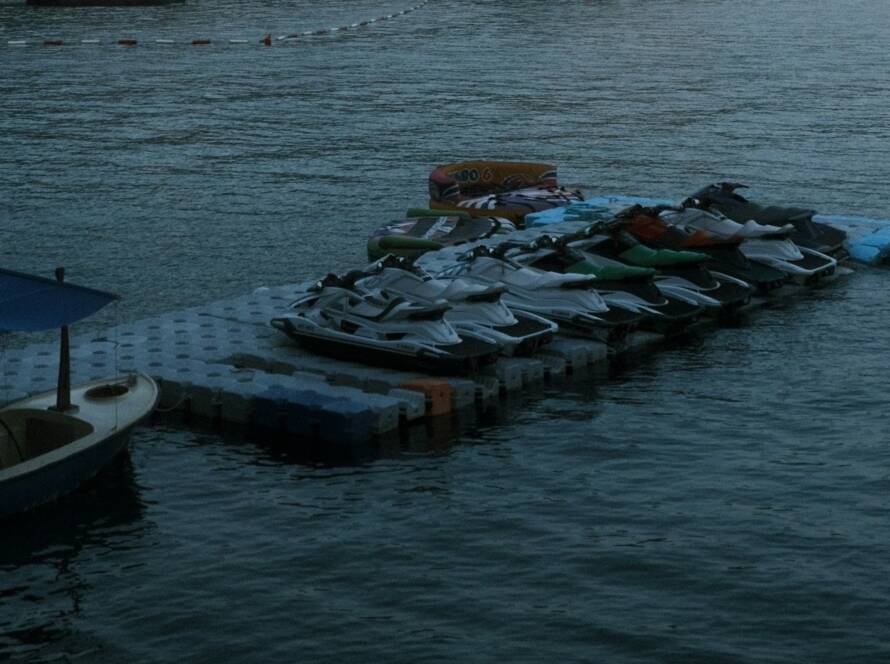
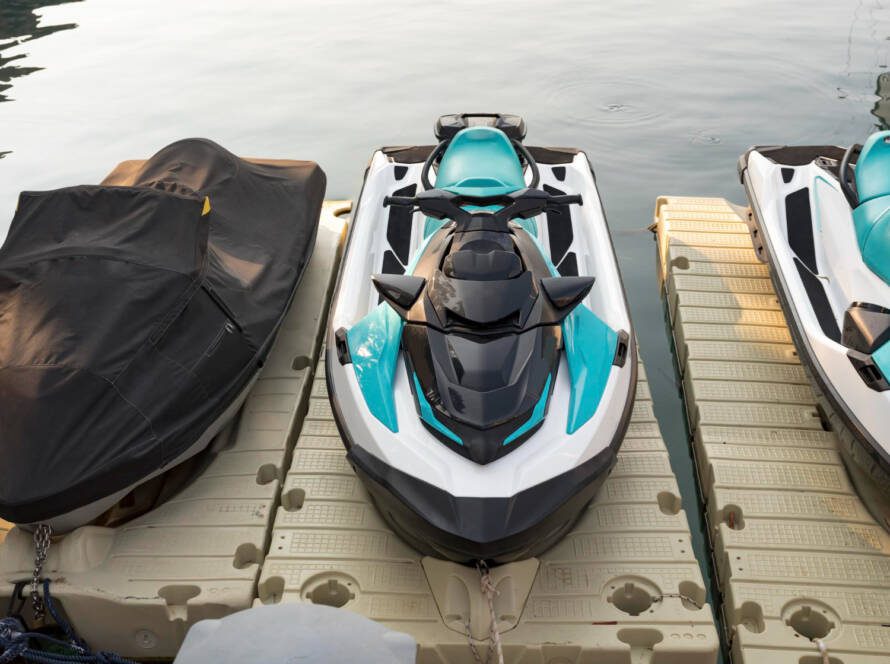
- A line of jet skis along one side of a dock, each with a rider and sometimes a passenger
- A crowd of guests waiting in a marked zone, while staff move on a separate path
- A floating platform used as a staging point for wakeboard or tow-boat lessons
To keep things safe, we allow a clear safety margin above the loads we calculate. Water does not always stay calm, and people do not always spread out evenly. Giving extra capacity helps the dock feel solid, even when everyone turns up at once.
Stability is just as important as total capacity. Key factors include:
- Freeboard, the height of the deck above the water
- Float size and spacing
- Overall footprint and how it is anchored
When freeboard and flotation are well matched to the type of craft, the dock feels steady instead of bouncy. That gives guests more confidence, speeds up boarding, and cuts down on slips and trips. Before we propose a layout, we like to assess each site, look at wind and wave exposure, and match the system to the real conditions.
Choosing Materials That Withstand UAE Heat and Salinity
The Gulf is tough on materials. Salt, heat, and strong sun combine to break down anything that is not designed for it. This is why material choice is as important as layout.
For floating structures and framing, we often compare:
- High-density polyethylene (HDPE) for floats and modular cubes
- Marine-grade aluminum for frames and walkways
- Treated or coated steel where extra strength is needed in connections or piles
UV-stabilized plastics help resist fading and surface cracking under direct sun. Corrosion-resistant metals handle the salty air and warm water better than standard grades. Modular cube systems offer flexibility, are quick to reconfigure, and are easy to repair by swapping individual cubes. Framed pontoons give a more traditional feel and can be ideal for certain commercial or government projects where specific shapes or clear spans are needed.
Busy watersports zones also see a lot of abuse:
- UV exposure that wears non-slip textures and makes low-grade plastic brittle
- Abrasion from fenders, boards, and repeated tie-ups
- Impacts from rough approaches or new riders still learning control
To keep docks performing well, we like details such as:
- Replaceable surface panels in the highest-traffic zones
- Textured, non-slip finishes that keep grip even when wet
- Sacrificial rubbing strips where craft often touch
- Flexible connectors that absorb some impact instead of passing it into the whole structure
Hardware matters too. In Gulf conditions, we generally specify:
- Marine-grade stainless steel for bolts, cleats, and hinges
- Coated or composite fasteners in areas that are always submerged
- Cleats, guide rails, and fenders sized to match jet skis, small boats, or RIBs that use the dock
Choosing the right mix at the start means less surprise repair work later and a longer service life for the whole system.
Creating a Maintenance Schedule That Matches UAE Conditions
Even the best engineered dock needs regular care, especially with heavy watersports use. A simple, clear schedule keeps small issues from turning into safety risks.
For many UAE watersports sites, a yearly cycle might look like this:
- Detailed inspection before peak season, often in early spring
- Follow-up checks ahead of public holidays and long weekends
- A deeper review after the busiest period, with any larger upgrades planned in quieter months
Commercial operators with rental fleets or hotel guests usually benefit from more frequent checks. Quick weekly visual walk-throughs can catch loose fittings, algae build-up, or damaged cubes before they affect service. Residential docks with lighter use may not need checks as often, but regular inspections still matter.
Key inspection points include:
- Float integrity and freeboard, looking for unusual low spots
- Connectors, hinges, and joints for signs of wear or cracking
- Anchoring lines, chains, or piles for movement or corrosion
- Non-slip surfaces, handrails, and safety ladders for grip and damage
For watersports, we also focus on:
- Clear approach paths for jet skis and small boats
- Secure mooring points where craft are tied during quick turnarounds
- Unobstructed emergency access for staff or patrol boats
Cleaning is part of safety. In warm water, algae and marine growth can build up quickly. Regular washing keeps surfaces grippy and maintains buoyancy. Sand is another issue, especially in shallow areas, where it can collect in corners and under floats.
We like to group minor repairs and part replacements into low-traffic periods to reduce downtime. As operations grow, it can make sense to add flotation modules, extend walkways, or integrate new accessories. A good maintenance log helps guide these choices based on real use, not just generic timelines.
Designing Watersports Docks for Efficient Operations
Good engineering is not only about strength, it is also about smooth daily use. A well-planned watersports floating dock layout can increase how many riders you serve in a day, while keeping things calm and controlled for staff.
To reduce congestion, layouts often separate:
- Launching and landing areas
- Fueling or service zones
- Waiting zones for guests and separate paths for staff
For example, some operations prefer:
- U-shaped docks that hold a line of jet skis on the inside, with a clear staff path on the outside
- Linear docks with side berths for tow boats, so boarding happens away from through-traffic
- Dedicated floating platforms for training, briefing, or low-speed practice
Safety design starts with clear, simple movement. Helpful details include:
- Walkways wide enough for people to pass without stepping close to the edge
- Handholds or rails in busy zones, especially where guests wait
- Non-slip surfaces and bright edge markings to show step changes
Freeboard height also matters here. If the dock is set at a sensible height compared to the craft, riders can step on and off without jumping. Boarding aids, such as angled jet ski docks or guide rails, help both new and experienced riders move safely.
Modular systems make it easier to respond when things change. Many waterfronts in the UAE host different events during the year, such as family days, corporate activities, or competitions. With modular docks, it is possible to:
- Add more slips when the fleet grows
- Extend or shorten walkways for special events
- Create floating stages or viewing platforms that connect to the main system
By planning for flexibility at the design stage, operators can adapt their docks as their watersports offerings grow, instead of starting from scratch each time.
Plan Your Next-Season Dock Upgrades Today
The best time to think about dock performance is before the next rush starts. A calm review of how your watersports floating dock handled the last peak season can reveal a lot. Maybe there were crowded spots, surfaces that wore faster than expected, or parts that needed frequent repair.
A structured process usually works best: review site conditions, check load capacity against real traffic, assess materials and fittings in the local environment, and shape a maintenance and upgrade plan around how your waterfront actually operates. As a UAE-based marine solutions company, we work on floating docks, pontoons, jet ski docks, and custom platforms for residential, commercial, and government clients, and we design each system around safety, durability, and smooth daily operations in Gulf waters.
Transform Your Waterfront With a Custom Dock Solution
Upgrade your shoreline with a durable, low-maintenance watersports floating dock tailored to how you actually use the water. At Wavetech Marine Docks, we help you plan and configure the right layout so launching, lounging, and storing gear is simple and safe. Tell us about your water depth, boat or PWC setup, and favorite activities, and we will recommend the best options for your space. Ready to move forward with a design or have questions about installation, maintenance, or pricing, just contact us.