Design Your Dock Layout for Safer Watersports
Planning a watersports floating dock is about more than just where to park the boat. A good layout helps keep people safe when the water gets busy, especially as spring breaks, school holidays, and long weekends bring more friends, family, and guests to the waterfront. When more boats, jet skis, kids, and visitors share the same space, small design choices can prevent big problems.
The main goal is simple: keep people separated from moving craft while still making access fast and convenient. To get that right, we have to blend three things: your site conditions, how people actually behave on the water, and the right HDPE floating dock system to support it all. At Wavetech Marine Docks, we plan and build layouts like this for marinas, villa waterfronts, resorts, and watersports operators across the UAE, so we see what works in real life.
Understanding Your Site and Traffic Patterns
Every safe dock layout starts with a clear look at the site. Before thinking about shapes and add‑ons, we take time to study the water and the shoreline. Key local conditions to check include:
- Wind direction and strength at different times of day
- Wave and wake exposure from open water or nearby channels
- Currents and tides across the year, not only in peak use months
- Water depth along the whole dock line
- Shoreline limits, existing structures, and any protected zones
Next, map how people and craft will move. We like to sketch this from both the water side and the land side, because seeing traffic from both directions makes it easier to spot bottlenecks and conflict points before they become safety issues. Think through where different craft will approach and leave, how guests will walk in from villas, parking, or the beach, and where staff tasks need space that shouldn’t mix with guest movement. It’s also worth considering how weekends, holidays, and special events will multiply traffic and change behavior.
It also helps to think ahead. Many sites start small, then add more craft or activities later. A modular HDPE system lets you add capacity and adjust the layout without having to rebuild from scratch, such as:
- Add extra jet ski berths without rebuilding the whole dock
- Extend walkways as fleets grow
- Reconfigure platforms when you change how you run activities
Core Safety Principles for Watersports Floating Docks
Once we understand the site, we build in clear safety zones. This is where layout planning makes the biggest difference. For safer watersports docks, we focus on:
- Keeping high‑speed craft away from swim and lounge areas
- Using dedicated launch lanes for jet skis and tow boats
- Placing swim areas away from refueling or engine zones
Approach and maneuvering space also matter. Boats and jet skis should have room to come in slowly and line up without tight turns near crowded edges. Wider corners, corner modules, and fenders help protect both craft and dock structure. HDPE modules with integrated cleats and tie points keep craft steady and reduce trip hazards from loose ropes.
Day‑to‑day use needs attention too. Non‑slip walking surfaces, rounded edges, and low step heights make boarding easier for kids, older guests, and people carrying gear. We also plan for the practical safety infrastructure that supports routine use and quick response, including:
- Safe ladder locations that are easy to see and reach
- Fixed spots for life rings and rescue gear
- Staff zones and briefing areas for commercial sites, away from busy edges
Smart Layout Ideas for Different Watersports Sites
Every waterfront is different, but certain layout ideas work well across similar types of sites.
For private villas and family waterfronts, we often suggest a straightforward layout that keeps access simple while separating quieter swimming from engine activity. Typical elements include:
- One main walkway running out from shore, with side fingers for boats and jet skis
- A calm swim area on the side away from engines and fueling
- Built‑in seating blocks and ladders in the swim zone
- Storage on the dock for life jackets, ropes, and fenders to keep walkways clear
For resorts, hotels, and beach clubs, clarity is everything. Guests arrive with different levels of experience, so layout should guide them without much explanation. The most effective plans clearly separate passive and active areas, then use visual cues and staff positioning to keep movement predictable:
- Separate lounging or sun‑deck sections from active launch zones
- Dedicated pick‑up and drop‑off platforms for tours and charters
- Color‑coded sections and simple signs for kayak, SUP, and jet ski areas
- Staff control points where briefings happen before guests step onto the active dock
Watersports rental and commercial operators often need high‑throughput layouts. Parallel berths let several jet skis or boats move in and out at the same time, which reduces congestion at the edge and helps staff keep operations moving. We also plan:
- Queuing space on land so customers are ready before they reach the dock
- Waiting zones on the dock that are back from the edge
- Staff‑only fingers for refueling, maintenance, and quick repairs so guests never stand near these operations
Engineering for Durability in Local Marine Conditions
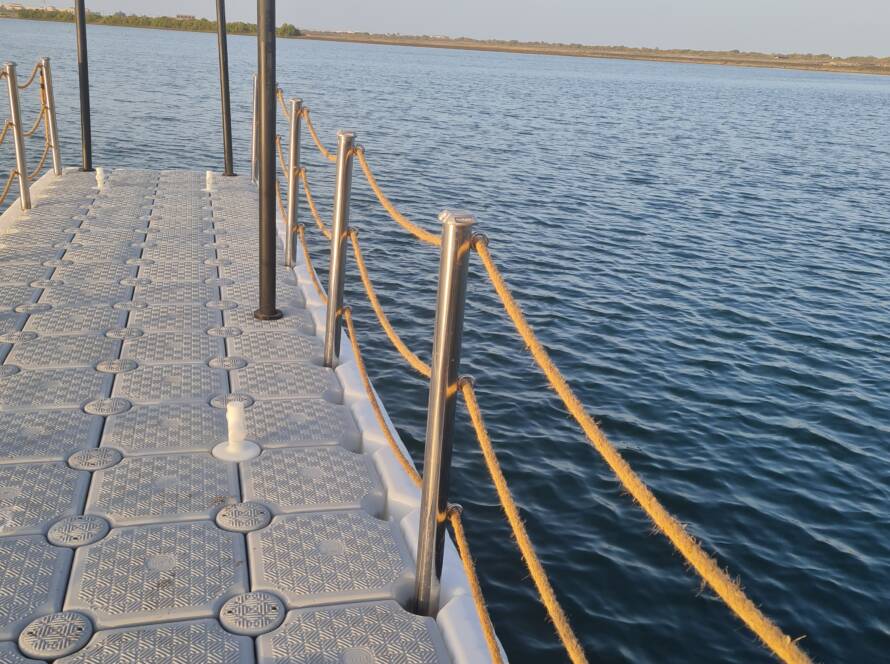
Safe layouts must also hold up to local conditions day after day. In the UAE, we deal with strong sun, high salinity, and constant marine exposure. HDPE floating systems work well here because they offer:
- High UV resistance under long hours of direct sun
- Good impact resistance against everyday knocks and wakes
- Low routine maintenance compared with many traditional materials
Modular HDPE docks can be reinforced for higher loads or more exposed sites. We often design outer sections to take more wave and wake energy, protecting calmer inner berths where people board and disembark. While planning, we look at how groups will gather in certain spots, where heavy gear or carts will move, and how weight spreads across the modules.
Anchoring is another key piece. The best choice, whether chains, piles, or bottom anchors, depends on seabed type, water depth, and exposure. Good anchoring keeps the dock stable enough for safe boarding without feeling stiff or harsh underfoot.
Ongoing inspections keep everything performing well. We like to build in:
- Clear access to connection points and anchors
- Simple ways to check wear before the busy spring and summer periods
- Layouts that allow repairs or part swaps with minimal disruption to operations
Operations, Signage, Training, and FAQs
Even the best watersports floating dock layout needs clear rules and training to stay safe. Visual guidance helps guests understand what to do without long talks every time. Useful tools include:
- Signs for speed limits and no‑wake zones near the dock
- Arrows or markers for approach direction and exit lanes
- Pedestrian‑only markings and no‑mooring sides
- Soft, glare‑free lighting for early morning and evening use
On the operations side, staff should follow standard procedures for launching, docking, and fueling. Short safety briefings can cover the core guest behaviors that prevent falls, collisions, and confusion, including:
- When and where life jackets are required
- How to step on and off craft safely
- Which areas are no‑go areas for guests
Busy sites benefit from dock attendants on peak days to manage traffic at the edge, guide craft into berths, and keep people out of service zones.
Emergency readiness is part of good planning too. We always allow:
- Fixed locations for rescue ladders and throw rings
- Access routes for rescue craft that stay clear of regular mooring
- Simple reporting processes so any incident leads to layout or rule improvements
Common questions we hear include, “How much space do I need?” The answer depends on:
- How many craft you plan to keep
- The mix of boats, jet skis, and paddle craft
- How much clear water you have for safe maneuvering
Another frequent question is, “Can I change my dock later?” With modular HDPE systems, you can usually expand, shift, or reshape berths as your operations grow. This is especially useful for seasonal demand changes, for example:
- Adding more jet ski parking in peak seasons
- Building a larger boarding platform for tour groups
For approvals and regulations, each emirate and waterfront type can have its own rules. Working with a specialist who understands local marine authorities helps make sure your project is planned in line with current expectations.
Transform Your Waterfront With a Smarter Dock Solution
Upgrade your shoreline with a custom-designed watersports floating dock that makes launching, storing, and enjoying your craft easier every day. At Wavetech Marine Docks, we’ll help you choose a configuration that fits your watercraft, water conditions, and long-term goals. Tell us about your location, and we’ll walk you through options, pricing, and next steps. Have questions or ready for a quote today? Simply contact us to get started.